
Clothing Manufacturer in Pakistan for European Brands
· TechSylph
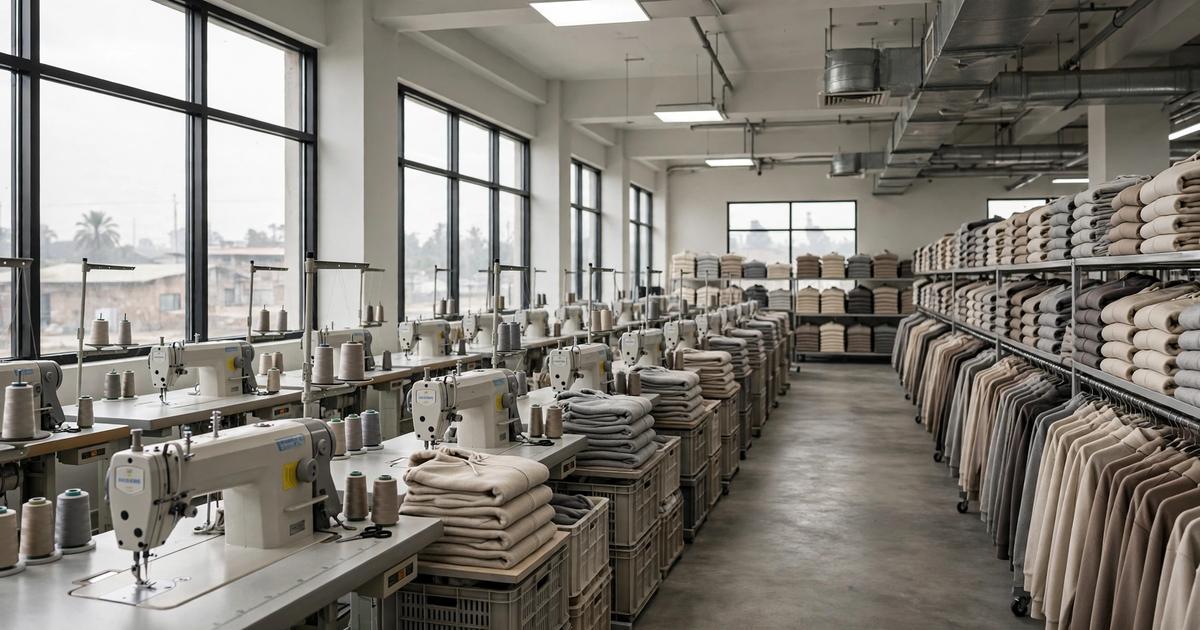
A practical guide for European brands sourcing from Pakistan — MOQs, sampling, quality checks, and DDP delivery, from 50 pieces per style.
A clothing manufacturer in Pakistan for European brands should offer small, flexible runs, clear sampling, reliable quality control, and door-to-door delivery to Europe — and Pakistan is a strong option because it combines experienced garment production with competitive costs and trade access to the EU. The right partner is not simply the cheapest factory you find: it is the one whose process, communication, and delivery terms fit how a European brand actually works.
For many European labels, the question is no longer whether Pakistan can make the product, but whether a particular manufacturer can make it consistently, at a manageable order size, and deliver it without customs surprises. This guide explains what to check and where brands most often go wrong.
Why European brands are turning to Pakistan
Pakistan has a long garment-manufacturing history, particularly in knitwear, fleece, hoodies, and sportswear. Factories in manufacturing cities such as Sialkot work with international buyers every day, so export documentation, labelling, and shipping routines are familiar rather than new.
There are three practical reasons European brands keep coming back. First, production costs are usually lower than in Western Europe, Portugal, or Turkey, which helps small and mid-sized brands protect margin without moving to very large minimum orders. Second, Pakistan's trade arrangement with the EU, known as GSP+, can reduce or remove import duty on many garment categories, depending on the product's tariff classification — a point worth checking with your freight forwarder or customs broker for your exact styles. Third, many Pakistani factories are set up for private-label work: your labels, your packaging, your design, rather than a generic catalogue product with someone else's branding.
Low cost only helps if quality, fit, and delivery are dependable. A cheap but inconsistent manufacturer costs far more in rework, delays, and lost trust than a slightly more expensive partner that gets the order right first time.
What to look for in a clothing manufacturer in Pakistan for European brands
Start with fit for your kind of product. A factory that excels at heavyweight fleece hoodies may not be the best choice for lightweight activewear, and vice versa. Ask to see recent work in your category — for example, the streetwear range or the hoodies and sweatshirts range if those are close to what you plan to sell — and judge whether the finishing, stitching, and fabric weights look like your brand's standard.
Then check the basics that separate a real factory from a middleman:
- Direct production. Can the factory show its own production floor, machinery, and team, rather than only samples made elsewhere?
- Clear minimums. Confirm whether the minimum order quantity applies per style, per colour, or per size. At TechSylph, the MOQ is a flat 50 pieces per style on all categories, which makes testing a new design realistic for a small brand.
- Sampling before bulk. Never approve bulk production without a sample in the real fabric. Ask how long sampling takes and what revisions cost. TechSylph sampling takes 3–4 days of production time, with courier delivery extra.
- Honest communication. Look for direct answers about fabric availability, decoration limits, and lead times. Vague promises at the quoting stage usually become problems later.
- Documentation you can verify. Ask what compliance, testing, or factory documentation the manufacturer can actually share for your order, and read it rather than accepting a general assurance. Do not assume any particular certificate applies unless you have seen the relevant document for that factory and product.
Finally, consider time zones. Pakistan is several hours ahead of most of Europe, so questions sent at the end of your day can often be answered overnight. What matters is a regular update rhythm — production photos, a clear timeline, and one point of contact.
How the process usually works
A typical private-label order follows the same sequence, whether you are ordering 50 pieces or 5,000:
1. Brief and quote. Send a tech pack if you have one, or sketches, reference garments, measurements, fabric preferences, and quantities. The factory should confirm what it can and cannot do before quoting, rather than quoting blind.
2. Sample approval. The factory makes a prototype in your chosen fabric with your branding. Check fit, fabric hand feel, print or embroidery quality, labels, and packaging. Ask for changes now — this is the cheapest stage at which to fix anything.
3. Bulk production. Once you approve the sample, bulk production begins. At TechSylph, bulk production is typically 15–20 days after sample approval, depending on the style, quantity, and decoration.
4. Quality checks. Inspect finished garments against the approved sample, not against a photo. Check measurements, stitching, decoration placement, and labelling before the order leaves the factory.
5. Delivery. Confirm the shipping terms in writing before production starts, so duties, taxes, and delivery responsibility are clear. TechSylph ships DDP worldwide, which means duties are handled as part of the delivery arrangement rather than landing as a surprise bill at your door.
The whole timeline depends on sampling rounds, fabric availability, and shipping time. Build in buffer for one extra sample revision, especially on your first order. A partner that rushes you past sampling is moving risk into bulk production, not saving you time.
Quality, sampling, and communication
Most quality problems are sampling problems. If the sample is approved loosely — wrong fabric weight, unchecked measurements, decoration approved from a photo alone — bulk production will faithfully reproduce those mistakes at scale.
Treat the sample as the contract. Measure it, wash-test it if your product will be washed repeatedly, wear-test it if you can, and photograph any changes you request with clear notes. Keep one approved sample as your reference and ask the factory to keep its own copy on file for comparison during bulk checks.
Put key decisions in writing: fabric, colour references, measurements, decoration method and placement, labels and packaging, quantities by size, and delivery terms. A short written confirmation after each stage prevents the most common sourcing dispute — a misunderstood specification.
Shipping to Europe: DDP, timelines, and planning
Shipping terms matter as much as unit price. Under DDP (delivered duty paid), the seller takes responsibility for delivering the goods to the agreed destination with duties handled, which gives a European brand a clearer landed cost. Under other terms, you may need to arrange import clearance and pay duties and taxes yourself on arrival. Neither is wrong, but you should know which one you are agreeing to before you pay a deposit.
For planning, work backwards from your launch date. Allow time for sampling, at least one revision if needed, bulk production of typically 15–20 days after sample approval, and international transit plus customs processing. Seasonal collections should be briefed early: a sample approved in good time is what protects a launch date.
Also confirm labelling and packaging requirements for your market at the brief stage — size labelling, care instructions, fibre composition, and country-of-origin marking can vary.
Common mistakes European brands make
- Choosing on unit price alone. The cheapest quote often excludes sampling revisions, better fabric, or proper delivery terms. Compare landed cost, not just the price per piece.
- Skipping the sample. Ordering bulk from a photo or a catalogue image is the fastest route to a warehouse of unsellable stock.
- Over-ordering the first run. A flat 50-piece MOQ exists precisely so you can test a design, a fit, and a supplier before committing to volume. Use it.
- Leaving decoration vague. "Printed logo" is not a specification. Confirm the method, size, placement, colours, and artwork file before production.
- Assuming a certificate or a claim. If a compliance point matters to your customers or retailers, ask for the document that supports it for your specific order, and keep it on file.
- No buffer in the timeline. Sampling, shipping, and customs all take real time. A launch date with no slack turns a normal delay into a crisis.
A short checklist before you place an order
Use this list on your first order with any new manufacturer: have you approved a sample in the real fabric? Is the MOQ confirmed per style and across your size range? Are fabric, measurements, decoration, labels, and packaging confirmed in writing? Is the bulk timeline stated from sample approval? Are shipping terms and duty responsibility confirmed? Do you know your point of contact and update rhythm? Have you kept the approved sample specification for quality checks? If several answers are no, close those gaps before committing to bulk.
FAQ
Is Pakistan a good place for European brands to manufacture clothing?
Yes, for many brands it is. Pakistan offers experienced garment production, competitive costs, private-label capability, and trade access to the EU, but the outcome depends on choosing a factory that fits your product category and follows a proper sampling and quality process.
What is the minimum order when working with a clothing manufacturer in Pakistan?
Minimums vary widely by factory, from a few hundred pieces per style at traditional plants to much smaller runs at factories set up for new brands. At TechSylph, the MOQ is a flat 50 pieces per style on all categories, so small brands can test a design without a large inventory commitment.
How long does it take to manufacture clothing in Pakistan for delivery to Europe?
Sampling at TechSylph takes 3–4 days of production time, plus courier delivery, and bulk production is typically 15–20 days after sample approval. Total time to Europe also depends on shipping and customs, so allow buffer beyond the production window when planning a launch.
Do Pakistani manufacturers ship DDP to Europe?
Some do, and it is worth confirming in writing before you order. TechSylph ships DDP worldwide, which means duties are handled as part of the delivery arrangement. If a factory quotes on different terms, ask what import costs and responsibilities will fall to you on arrival.
What should I check before choosing a manufacturer in Pakistan?
Check that the factory makes your product category, offers a sample in the real fabric before bulk, states its MOQ clearly per style, communicates in writing, and can share documentation relevant to your order. Also confirm shipping terms, timelines from sample approval, and how quality will be checked against the approved sample.
Can a small European brand order just 50 pieces per style?
Yes, with the right partner. A flat 50-piece MOQ per style lets a small brand launch a design, test fit and demand, and reorder what sells, rather than committing to hundreds of pieces before knowing how customers will respond.
Ready to test a design with a Pakistan-based manufacturer? Request a quote with your tech pack or reference garments, or browse the catalog to see the styles TechSylph already produces for private-label brands.
Ready to source your next collection?
Get factory-direct pricing with low MOQ and full customization options.