
Custom Activewear Manufacturing: A Brand's Guide for 2026
· TechSylph
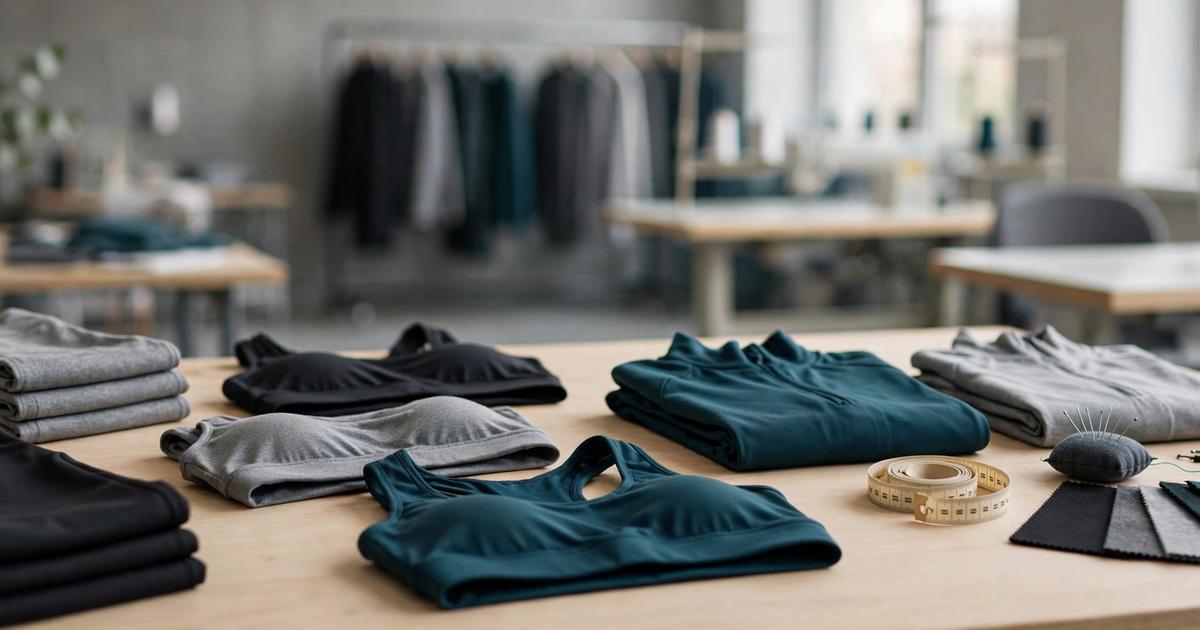
How to choose a custom activewear manufacturer, what the process looks like, and how to launch a performance line from 50 pieces per style.
A custom activewear manufacturer is a factory that produces performance apparel — leggings, sports bras, training tees, shorts, and tracksuits — to your brand's own designs, fabrics, and branding, rather than selling you ready-made stock. The right partner handles everything from fabric sourcing and pattern-making to printing, sewing, and delivery, so you can launch a fitness line without owning a factory. This guide walks you through how to choose one, what to expect at each step, and how to avoid the mistakes that cost new activewear brands time and money.
What does a custom activewear manufacturer do?
A custom activewear manufacturer turns your design ideas into finished garments that perform. Unlike a generic apparel factory, a good activewear partner understands the specific demands of performance clothing: fabrics that stretch and recover, seams that sit flat against skin during movement, and prints that survive repeated washing and sweating.
The full service typically covers:
- Fabric sourcing — performance knits such as nylon-spandex and polyester-spandex blends, in the weights and finishes your line needs.
- Pattern-making and grading — turning your tech pack or reference samples into production-ready patterns across all sizes.
- Sampling — a physical prototype in the real fabric so you can test fit, stretch, and comfort before committing to bulk.
- Branding — screen printing, heat transfer, sublimation, silicone prints, embroidery, woven labels, and custom packaging.
- Bulk production and quality control — cutting, stitching, inspection, and packing to your specification.
- Delivery — export shipping to your door, ideally on DDP (delivered duty paid) terms so the landed cost is known in advance.
Why activewear is harder to manufacture than basics
Activewear looks simple from the outside, but it is one of the more technically demanding categories in apparel. A t-shirt forgives a lot; a pair of leggings does not.
Stretch and recovery. The fabric has to move with the body and snap back after hundreds of wears. That means the right blend — usually nylon or polyester with 15–25% spandex — and the right knit construction. Cheap fabric goes baggy at the knees after a few washes, and your customers notice immediately.
Seam construction. Flatlock seams are the standard for performance pieces because they lie flat, reduce chafing, and look clean. A factory without flatlock machines will offer overlock seams instead, which is a visible downgrade on leggings and fitted tops.
Fit across sizes. Activewear is worn close to the body, so grading errors show up fast. A waistband that is fine in size S can dig in at size XL if the grading is wrong. Always check the sample across at least three sizes before approving bulk.
Print and branding durability. Logos on activewear take a beating: sweat, stretch, heat, and repeated washing. Silicone transfers, sublimation, and heat-transfer vinyl all behave differently on stretch fabric. Ask your manufacturer which method they recommend for your specific fabric — and test it on the sample.
How to choose a custom activewear manufacturer
1. Check their activewear track record
Ask for examples of activewear they have actually produced — leggings, sports bras, compression tops — not just hoodies and tees. A factory that mainly makes streetwear may not own flatlock machines or stock performance fabrics.
2. Ask about fabrics first
Fabric is the product in activewear. Ask what performance fabrics they carry, what weights are available, and whether they can source a specific blend if you need one. If a factory cannot name the fabric composition it uses, move on.
3. Confirm the MOQ and what it covers
Minimum order quantities vary wildly. Some factories demand 300–500 pieces per style; others work with small brands. At TechSylph, the MOQ is a flat 50 pieces per style across all categories, including activewear — so you can launch a three-piece set at 50 sets rather than committing to hundreds of units before you know what sells. Clarify whether the MOQ is per style, per colour, or per size: 50 pieces per style split across colours is very different from 50 per colour.
4. Insist on a physical sample
Never approve bulk production from photos alone. A sample in the real fabric tells you what no spec sheet can: how it feels, how it stretches, whether the waistband stays put, and whether the print survives a wash. TechSylph produces samples in 3–4 days of production time, plus courier delivery, so sampling does not have to slow your launch down by weeks.
5. Get the full timeline in writing
Ask for the production timeline and the shipping timeline separately. Bulk production at TechSylph typically takes 15–20 days after sample approval, and shipping is DDP worldwide — duties and delivery are handled, so the price you approve is the price you pay, with no surprise charges at the border.
6. Look for honest communication
A good manufacturer tells you what can go wrong before it does. If a factory promises everything, instantly, with no questions about your tech pack or fabric choice, be suspicious. The best partners ask questions — about fit, fabric weight, print placement — because they are thinking about how the garment will actually perform.
The custom activewear manufacturing process, step by step
Step 1: Brief and quote
Send your tech pack, sketches, or reference garments, plus quantities, colours, and branding details. A serious factory will come back with a quote, a fabric proposal, and a timeline — not just a price. Request a quote
Step 2: Fabric and trim sourcing
The factory sources the fabric and trims (elastic, drawcords, labels, zips) to your specification. If you have a specific fabric in mind, share a swatch or a composition target and let the factory match it.
Step 3: Sampling
A proto sample is made in the real fabric, with your branding applied. Wear it, wash it, stretch it. This is the cheapest point in the whole process to find problems — fixing a fit issue at sample stage costs days; fixing it in bulk costs the whole order.
Step 4: Sample approval and revisions
Review the sample against your tech pack, list every change, and get a revised sample if needed. Only approve when the garment is right. Rushed approvals are the single most common cause of bulk-production regret.
Step 5: Bulk production
Once the sample is approved, bulk production runs — typically 15–20 days at TechSylph after approval. Expect production updates and a final quality check before packing.
What activewear can you make at low MOQ?
At a 50-piece MOQ, a small brand can build a real launch collection instead of betting everything on one style. A sensible starter range might include:
- Leggings in one or two colours — the anchor product of most activewear lines.
- Sports bras matched to the leggings as a set.
- Training tees or crop tops — quick to produce, easy to brand.
- Shorts or joggers — for a broader training or athleisure offer.
- Zip-up jackets or hoodies — for layering and higher average order value.
Browse the activewear and sportswear range to see the kinds of pieces a full-service factory can produce for your brand.
Common mistakes new activewear brands make
Choosing fabric on price alone. The cheapest performance fabric is usually the one that loses its shape first. Your customers will judge your brand on the second wash, not the first wear.
Skipping the wash test. Always wash the sample at least twice before approving bulk. Prints crack, colours bleed, and elastic relaxes — and none of it shows on a fresh sample.
Approving a sample in one size only. Fit problems hide in the extremes. Check at least a small, a medium, and a large before signing off.
Ordering too much of one style. At 50 pieces per style, you can test five styles instead of betting 250 pieces on one. Let sales data decide what to reorder.
Forgetting the details. Waistband grip, drawcord quality, label placement, packaging — these are the touches customers remember, and they cost almost nothing to get right at sample stage.
How much does custom activewear manufacturing cost?
There is no single price for a custom legging or sports bra — cost depends on fabric, construction, branding, and order size. The main drivers are:
- Fabric — performance blends cost more than basic cotton jersey, and heavier weights cost more than lighter ones.
- Construction — flatlock seams, bonded hems, and lined sports bras add labour time.
- Branding — silicone transfers and sublimation cost more than a simple screen print.
- Volume — unit cost falls as quantity rises, because setup costs (patterns, screens, digitizing) are spread over more pieces.
That is why a flat 50-piece MOQ matters: it keeps the entry cost low while you prove the product, and the per-unit price improves on reorders. Always get a quote based on your actual tech pack — a price given without seeing the design is a guess, not a quote.
FAQ
What is the minimum order for custom activewear?
It depends on the factory. Many require 300–500 pieces per style, but some work with small brands at much lower volumes. TechSylph's MOQ is a flat 50 pieces per style on all categories, including activewear.
How long does it take to manufacture custom activewear?
Sampling takes 3–4 days of production time, plus courier delivery. Bulk production typically takes 15–20 days after sample approval. Allow extra time for shipping, or choose DDP delivery so the landed timeline is clear from the start.
What fabrics are best for activewear?
Nylon-spandex and polyester-spandex blends are the standard for performance pieces — they stretch, recover, wick moisture, and hold their shape. The right blend depends on the garment: leggings usually need more spandex for compression, while training tees can use a lighter, more breathable knit.
Can I get my logo printed on activewear at low quantities?
Yes. Silicone transfers, heat transfer, sublimation, and screen printing are all available at 50-piece runs. The best method depends on the fabric — ask your manufacturer to recommend one and test it on the sample before approving bulk.
Do custom activewear manufacturers ship internationally?
Established export manufacturers do. TechSylph ships DDP worldwide, which means duties and customs are handled and the quote you approve is your final landed cost.
What should I send a manufacturer to get a quote?
A tech pack is ideal, but sketches or reference garments plus quantities, colours, fabric preferences, and branding details are enough to start. The more specific your brief, the more accurate the quote.
TechSylph manufactures custom activewear in Sialkot, Pakistan from 50 pieces per style — samples in 3–4 days, bulk in 15–20 days after approval, shipped DDP worldwide. Request a quote or browse the full catalog.
Ready to source your next collection?
Get factory-direct pricing with low MOQ and full customization options.