
OEM vs ODM Clothing Manufacturing: Which Is Right for Your Brand?
· TechSylph
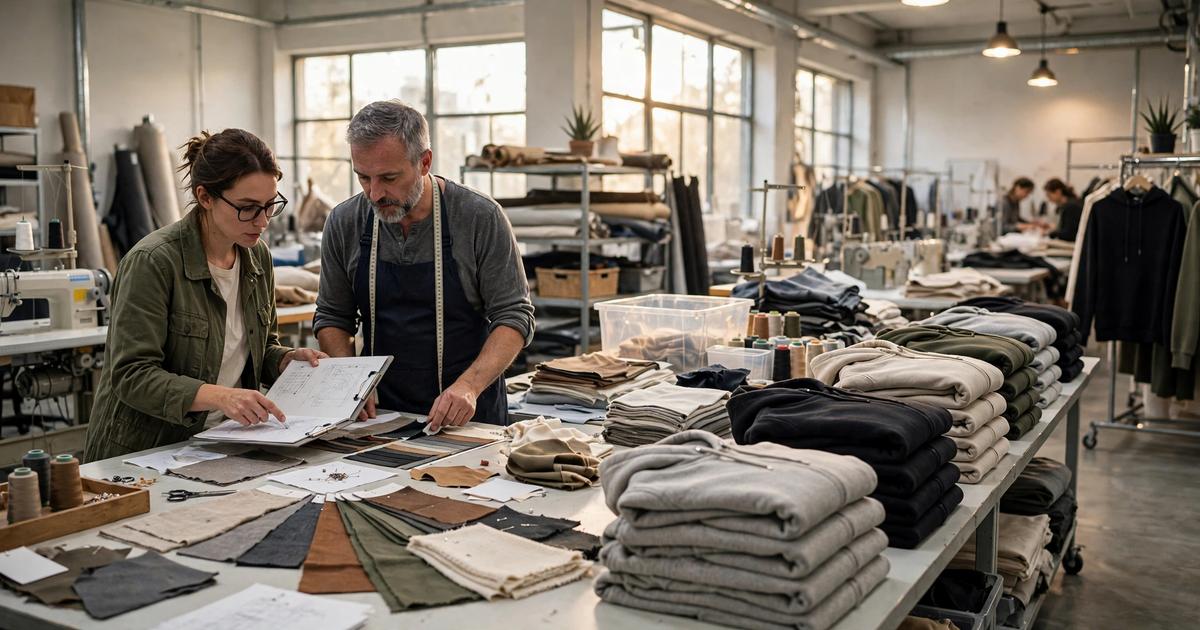
OEM vs ODM clothing manufacturing explained: who designs the garment, what each model costs, how fast you can launch, and which one fits your brand.
OEM vs ODM clothing manufacturing comes down to one question: who designs the garment? With OEM (original equipment manufacturing), you supply the design and the factory makes it to your spec. With ODM (original design manufacturing), the factory supplies a ready-made design and you put your label on it. Both routes can produce great clothing — but they suit very different brands, budgets, and timelines.
If you have ever read a factory's website and felt lost in the alphabet soup, you are not alone. OEM, ODM, private label, white label — factories use these terms loosely, and sometimes interchangeably. This guide explains exactly what each model means in practice, how they differ on cost, control, speed, and risk, and how to decide which one fits your brand right now.
What is OEM clothing manufacturing?
OEM means the factory manufactures a product designed by you. You own the design — the tech pack, the patterns, the fabric choices, the trims, the branding — and the factory's job is to execute it faithfully.
In practice, an OEM clothing order looks like this: you send a tech pack (or sketches and reference garments), the factory sources the fabric and trims you specified, makes a proto sample for your approval, and then runs bulk production exactly to the approved sample. Your label, your design, your intellectual property.
OEM is the standard model for brands that have their own design identity. If you are building a streetwear label with a specific fit, a custom print, or a silhouette nobody else sells, OEM is how you get it made.
What is ODM clothing manufacturing?
ODM means the factory designs the product and you sell it under your brand. The factory has a catalogue of ready-made styles — a hoodie, a tee, a jacket — developed in-house, and you choose one, add your logo and labels, and order it.
ODM is sometimes called white label, though the two are not quite identical: white label usually means a finished generic product sold to many brands with only the branding changed, while ODM can include small customisations such as fabric colour, a different print, or a modified trim. In practice, the line between them is blurry, and many factories treat them as the same thing.
ODM suits brands that need product fast and do not need a unique design. If you want to launch a merch line, stock a retail store, or test whether your audience buys hoodies at all before investing in original design, ODM gets you there in weeks rather than months.
OEM vs ODM: the key differences
| | OEM | ODM |
|---|---|---|
| Who designs it | You (the brand) | The factory |
| Uniqueness | Fully custom, exclusive to you | Shared design, possibly sold to other brands |
| Setup cost | Higher — patterns, sampling, tooling | Lower — design already exists |
| Speed to market | Slower — sampling and development take time | Faster — pick, brand, produce |
| Minimum order | Usually higher | Often lower |
| Control | Full control over fabric, fit, and details | Limited to colours, branding, minor tweaks |
| IP ownership | Yours | Factory's (you license the use) |
The trade-off is simple: OEM buys you originality and control; ODM buys you speed and simplicity. Neither is objectively better — it depends on what your brand needs at this stage.
How much does each model cost?
OEM usually costs more per unit at small volumes. You pay for pattern-making, sampling rounds, and any tooling (screens, embroidery digitising, custom moulds). Those setup costs are spread across your order, so at 50 pieces they weigh heavily; at 500 pieces they barely register.
ODM avoids most setup costs because the design, patterns, and often the fabric are already developed. You mainly pay for the garment, your branding, and any minor changes. For a first order, ODM is almost always the cheaper way in.
But be careful with the comparison. A cheap ODM hoodie that looks like everyone else's may cost you more in the long run — in markdowns, in returns, in a brand nobody remembers. Price per unit is only one part of the real cost of a product.
Speed: how fast can you launch?
ODM wins on speed. A ready-made style can go from selection to bulk production in a matter of days once branding is confirmed, because there is no pattern development or design sampling cycle.
OEM takes longer because development is part of the job. At TechSylph, sampling takes 3–4 days of production time, and bulk production typically runs 15–20 days after sample approval, plus courier delivery. That is fast for OEM — many factories take weeks just for a first sample — but it is still slower than picking an existing style off the shelf.
If you have a hard deadline — a drop date, a trade show, a seasonal window — be honest with your factory about it. A good manufacturer will tell you plainly whether OEM is feasible in your timeframe or whether ODM is the safer route for this order.
Control and quality: what you give up with ODM
With OEM, you control everything: the fabric weight, the fit, the stitching, the trims, the wash, the packaging. If you want a 500gsm heavyweight hoodie with a garment-dyed finish and a specific drawcord, OEM is how you get it.
With ODM, you accept the factory's choices. You can usually change the colour, add your logo, and swap a label — but the fit, the fabric, and the construction are what they are. Always request a sample of the exact ODM style before committing: a catalogue photo will not tell you how the garment actually feels and fits.
Quality control matters in both models, but it matters differently. In OEM, you approve a proto sample made to your spec, so bulk should match it. In ODM, the sample is the product — inspect it closely, because what you see is what your customers will get.
Can you mix OEM and ODM?
Yes — and many successful brands do. A common strategy is to use ODM for fast, simple staples (plain tees, basic hoodies) and OEM for the hero pieces that define the brand (a signature jacket, a custom-fit sweat set). This keeps your range full and your launch fast while your original designs carry the brand identity.
Another hybrid approach is "ODM plus": start from a factory's existing style and modify it — change the fabric, adjust the fit, add a custom print or embroidery. You get most of OEM's uniqueness with much of ODM's speed. Not every factory offers this, so ask before you assume.
OEM vs ODM: which is right for your brand?
Choose OEM if:
- Your design is the reason customers buy from you.
- You have a tech pack, sketches, or reference garments ready.
- You need a specific fabric, fit, or construction nobody else offers.
- You are building a long-term brand and want designs nobody else can sell.
- You can wait for sampling and development.
Choose ODM if:
- You need product fast — a launch, a restock, a seasonal window.
- You are testing demand before investing in original design.
- Your priority is a reliable staple at a low cost, not a unique silhouette.
- You do not have a tech pack or design resources yet.
- You want to start selling and learn from real customers first.
And if you are somewhere in between, ask your factory about a hybrid: an existing style modified to your spec. The right answer is the one that matches your timeline, your budget, and how much your design matters to your customer.
How TechSylph works with both models
TechSylph works as both an OEM and ODM clothing manufacturer. If you bring your own designs, we manufacture to your tech pack with a flat MOQ of 50 pieces per style across all categories — sampling in 3–4 days, bulk production typically 15–20 days after sample approval, and DDP shipping worldwide. If you would rather start from existing styles, we can supply ready-made designs for you to brand and customise, with the same 50-piece MOQ and the same door-to-door delivery.
Either way, the process starts the same: you send your brief, we quote and confirm a timeline, you approve a sample, and production runs only after you are happy with it. Browse the range in our catalog or explore hoodies and sweatshirts to see the styles we work with most.
FAQ
What does OEM mean in clothing manufacturing?
OEM (original equipment manufacturing) means the factory makes a garment designed by you. You supply the tech pack, patterns, and specs; the factory manufactures it to your design and your brand owns the intellectual property.
What does ODM mean in clothing manufacturing?
ODM (original design manufacturing) means the factory designs the garment and you sell it under your brand. You choose from the factory's ready-made styles, add your logo and labels, and order — usually with lower setup costs and a faster turnaround than OEM.
Is OEM or ODM better for a new clothing brand?
It depends on your priorities. ODM is better if you need product fast and cheap to test demand. OEM is better if your design is what makes your brand different and you can wait for sampling and development. Many new brands start with ODM staples and move to OEM for hero pieces.
Is ODM the same as private label?
Not exactly, though the terms overlap. Private label means a product sold under your brand name — it can be OEM or ODM. ODM describes who designed the product (the factory). A private label product made to your own design is OEM, not ODM.
Can I switch from ODM to OEM later?
Yes. Many brands start with ODM to get selling quickly, then develop original OEM designs once they know what their customers want. A good factory supports both models, so you do not need to change manufacturer when you are ready to go custom.
What is the minimum order for OEM clothing manufacturing?
It varies by factory, but traditional factories often require 300–1,000 pieces per style. At TechSylph, the MOQ is a flat 50 pieces per style on all categories for both OEM and ODM orders, so small brands can start with original designs without a huge inventory commitment.
Whether you bring your own design or start from an existing style, the next step is the same: send your brief and get a real quote. Request a quote or browse the catalog to see what we make.
Ready to source your next collection?
Get factory-direct pricing with low MOQ and full customization options.