
Pakistan vs China Clothing Manufacturing: An Honest Comparison for Brands
· TechSylph
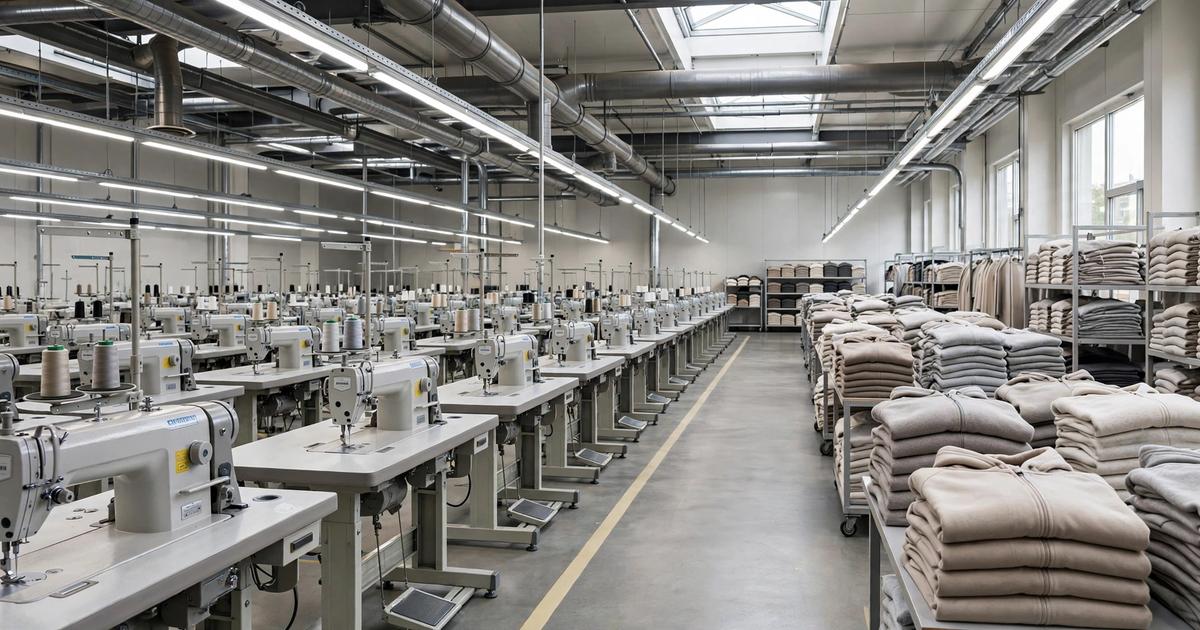
China wins on scale, Pakistan on low minimums and cotton expertise — an honest comparison to help your brand choose the right sourcing country.
If you are weighing Pakistan vs China clothing manufacturing, the short answer is this: China still wins on sheer scale, component depth, and speed for very large, complex orders, while Pakistan is often the stronger choice for small and mid-sized brands that want lower minimums, competitive pricing on cotton-based apparel, and a factory-direct partner they can actually talk to. Neither country is "better" in the abstract — the right choice depends on your order size, your product type, and how much control you want over the process.
This guide compares the two honestly, including where each one falls short.
Pakistan vs China clothing manufacturing at a glance
| Factor | Pakistan | China |
|---|---|---|
| Best for | Small to mid-sized brands, cotton apparel, streetwear, hoodies, activewear | Very large orders, complex garments, deep component supply chains |
| Typical minimum order | Often 50–300 pieces per style at export factories | Often 500–1,000+ pieces per style at larger factories |
| Price | Very competitive on cotton-based basics and fleece | Competitive at volume, but rising labour and overhead costs |
| Sampling speed | Fast at the right factory — TechSylph samples in 3–4 days | Fast in major hubs, but sampling queues can be longer |
| Specialties | Cotton knitwear, fleece, hoodies, sweatshirts, denim, activewear | Almost everything, including technical outerwear and synthetics |
| Communication | English widely spoken in export factories | Varies widely; agents often sit between you and the factory |
The sections below explain what sits behind each row.
Cost: where the price difference really comes from
On a like-for-like cotton hoodie or T-shirt, Pakistan is usually price-competitive with China, and often cheaper once you factor in the total landed cost rather than just the factory-gate price. Labour costs in Pakistan remain lower than in China's coastal manufacturing hubs, and the country grows much of its own cotton, which shortens the supply chain for cotton-based garments.
China's advantage appears at scale. When you order 5,000 or 10,000 pieces, Chinese factories spread setup costs — pattern-making, screens, moulds, and trims — over a huge run, and their dense supplier networks keep component prices low. At that volume, China is hard to beat on unit price alone.
Always compare at the same quantity, with the same fabric, trims, and decoration, and ask for the landed cost including shipping and duties. A cheap factory price that arrives with surprise freight and duty bills was never cheap. At TechSylph, shipping is DDP worldwide, so the quote you approve is the landed cost.
Minimum order quantity: the deciding factor for new brands
This is where the two countries diverge most sharply for emerging brands. Many large Chinese factories now set minimums of 500 or 1,000 pieces per style, and some will only take on brands that can commit to ongoing volume. That makes sense for their business model, but it prices out a brand launching its first drop.
Pakistani export factories are generally more flexible. At TechSylph, the MOQ is a flat 50 pieces per style across all categories — hoodies, T-shirts, streetwear, activewear, and outerwear alike. That means you can launch several styles at 50 pieces each, see what sells, and reorder the winners instead of gambling a full season's budget on untested designs.
If you are an established brand ordering thousands of units per style, MOQ will not decide this for you. If you are launching or growing, it very well might.
Speed: sampling and bulk production timelines
Speed has two parts: how fast you get a sample you can approve, and how fast bulk production runs after approval. China has enormous capacity, but that capacity is shared with the world's biggest brands, and small orders can wait behind larger ones — particularly around peak seasons and holidays.
Pakistan's export factories serving smaller brands can often move faster on the first sample, because your order is not queued behind a 50,000-piece program. At TechSylph, sampling takes 3–4 days of production time (courier delivery is extra), and bulk production is typically 15–20 days after sample approval. That timeline holds for small and mid-sized runs; very large or highly complex orders take longer in either country, and any honest factory will say so upfront.
Whichever country you choose, build buffer into your launch calendar — fabric delays and shipping disruptions happen everywhere.
Quality and specialisation: matching the product to the country
Pakistan's historic strength is cotton. The country has a deep textile base — spinning, knitting, dyeing, and cut-and-sew — and its factories have decades of experience in fleece, jersey, and knitwear. If your range is built on hoodies, sweatshirts, T-shirts, joggers, and similar cotton-based styles, Pakistan is producing those garments at world-class quality every day.
China's strength is breadth. Its factories cover an enormous range of product types, from technical outerwear and performance synthetics to intricate trims, hardware, and accessories, all supported by local component suppliers. If your product needs specialised synthetic fabrics, complex waterproofing, or unusual hardware that only exists in one industrial cluster, China may be the practical choice.
Do not judge a country's quality in general — judge a specific factory on your specific product. Ask for samples in your actual fabric, check stitching, print, and embroidery up close, wash-test the sample, and only then commit to bulk.
Communication and control: factory-direct vs layers in between
One of the most underrated differences is how many layers sit between you and the people actually sewing your garments. In China, many Western brands work through trading companies or agents, which adds cost and slows down every correction — a fabric change becomes a game of telephone.
Pakistan's export factories, particularly smaller and mid-sized ones, often work factory-direct. You speak to the team making your order, send your tech pack straight to production, and get answers without an intermediary marking up the price or filtering the message. That directness matters most when something goes wrong, as it occasionally will: a direct line to the factory floor resolves problems in hours, not weeks.
Either way, ask before you commit: Who is my point of contact? Can I see production photos during my run? What happens if bulk does not match the approved sample?
Shipping, duties, and the landed cost
Shipping from either country is straightforward for an experienced exporter, but the terms matter more than the route. Under DDP (delivered duty paid), the seller handles shipping, duties, and delivery to your door, so your landed cost is fixed upfront. Under other terms, you may face duty bills, brokerage fees, and delays you did not budget for.
TechSylph ships DDP worldwide, which removes that uncertainty. If you source from China, confirm the same in writing: who pays duties, who handles customs clearance, and what happens if a shipment is held.
Risks and honest downsides on both sides
No sourcing destination is risk-free. Pakistan's challenges include a smaller component ecosystem than China — unusual trims or niche synthetic fabrics may need importing, adding lead time — and logistics disruptions that make realistic timelines matter more than the fastest possible quote. China's challenges include higher minimums, rising costs in coastal hubs, communication layers, and tariff uncertainty that can change landed cost after you have set retail prices. The mitigation is the same in both countries: start with a sample, start small, verify quality before scaling.
So which country should your brand choose?
Choose Pakistan if you are a small or mid-sized brand, your range is built on cotton-based apparel such as hoodies, sweatshirts, T-shirts, and activewear, you want a low MOQ to test designs, and you value a direct relationship with your factory. Choose China if you order in very large volumes, your product needs specialised synthetics, technical construction, or components that only China's supply chain provides, or you already have a trusted factory relationship there.
Many growing brands end up using both: Pakistan for their core cotton range and test drops, China for a specific technical style. Pick the right factory for each product, and let results decide where your next order goes.
Working with a Pakistan factory: what to expect
If you decide to explore Pakistan, the process with a factory-direct partner like TechSylph looks like this: send your tech pack, sketches, or reference garments; receive a quote with a confirmed MOQ of 50 pieces per style; approve a sample in your real fabric within 3–4 days; then move to bulk production, typically 15–20 days after approval, with DDP delivery worldwide. Browse the catalog or start with a Request a quote — no pressure to order before the sample convinces you.
FAQ
Is Pakistan or China cheaper for clothing manufacturing?
It depends on volume and product. Pakistan is usually very competitive on cotton-based apparel at small to mid-sized quantities, while China often wins on unit price at very large volumes thanks to scale and component depth. Always compare landed costs at the same quantity.
What is the typical MOQ in Pakistan vs China?
Many Chinese factories set minimums of 500–1,000 pieces per style, while Pakistani export factories are often more flexible. At TechSylph, the MOQ is a flat 50 pieces per style on all categories.
Which country is better for hoodie and streetwear manufacturing?
Both countries make excellent hoodies, but Pakistan has a particular strength in cotton fleece and knitwear, which is the foundation of most hoodies and sweatshirts. Check a factory's samples in your exact fabric rather than relying on country reputation alone.
How long does production take in Pakistan compared to China?
Timelines overlap more than most brands expect. At TechSylph, sampling takes 3–4 days of production time and bulk production typically runs 15–20 days after sample approval, plus courier or freight time. Larger or more complex orders take longer in either country.
Can a small brand manufacture in Pakistan?
Yes — Pakistan is often a better fit for small brands than China precisely because of lower minimums and factory-direct communication. A 50-piece run lets you launch, test, and reorder without committing to warehouse quantities.
Is it risky to switch from China to Pakistan?
Switching carries the same risk as switching to any new factory: unfamiliar quality, communication, and timelines. Mitigate it by starting with a sample order, verifying bulk against the approved sample, and keeping your existing supplier until the new one has proven itself on a real run.
If you are still deciding between Pakistan vs China clothing manufacturing, the cheapest test is a sample: one style, your fabric, your branding, judged on its own merits. Request a quote to start that conversation, or browse the catalog to see the styles TechSylph already produces.
Ready to source your next collection?
Get factory-direct pricing with low MOQ and full customization options.